Brands pay a fortune for a book that says who they are. You deserve one too — and yours will fit in your pocket.
This masterclass began as a conversation at a mentor’s workshop in 2016 — what if a person’s identity could be crafted with the same care a studio gives a brand? A decade of prototypes followed: booklets made for mystics, for mothers, for friends who needed their own words read back to them before they could believe them.
Every version taught the process something — which questions open people up, which page has to come last, how a single cut turns loose paper into a bound book. What’s left is the distillation: four questions, eight panels, one sheet.
Your sitting takes an afternoon because the ten years are already in it.
You’ll tell your story out loud, shape it with a working editor across four questions, and set it into an eight-page booklet you draw, fold, and cut yourself. The pages run from the self everyone meets to the self almost no one does — the reader unfolds their way in.
An ordinary letter sheet becomes a bound book with real pages. Every leaf ends up two layers thick, so the paper suddenly feels like card stock — and every page you turn to has something on it.
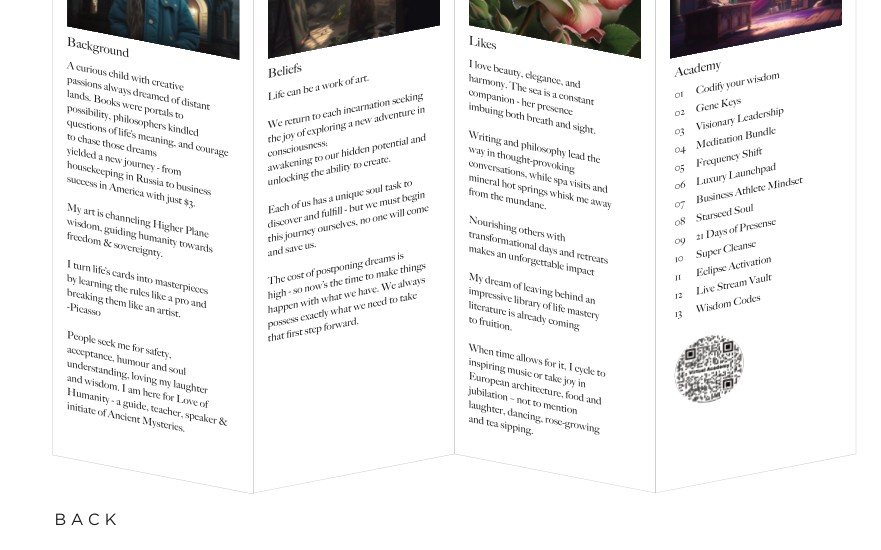
Where you come from, facing who you are on an ordinary Tuesday. The two halves of the origin story.
The name you carry, next to the things you love. Who you are, and the evidence.
Where you’re going, resting on what you stand on. The fold pairs them — on purpose.
Background. Beliefs. Likes. Future. Warm, open questions — the kind you already know the answers to, once someone actually asks.
Your answers get mined for the good ore: the epithets, the through-lines, the one-liners hiding in your own sentences. Identity isn’t a question on the list — it’s what surfaces.
Grid the sheet, letter your panels, make the fold and the single cut. You walk out with a bound booklet of your own story, made by your own hands, the same day.
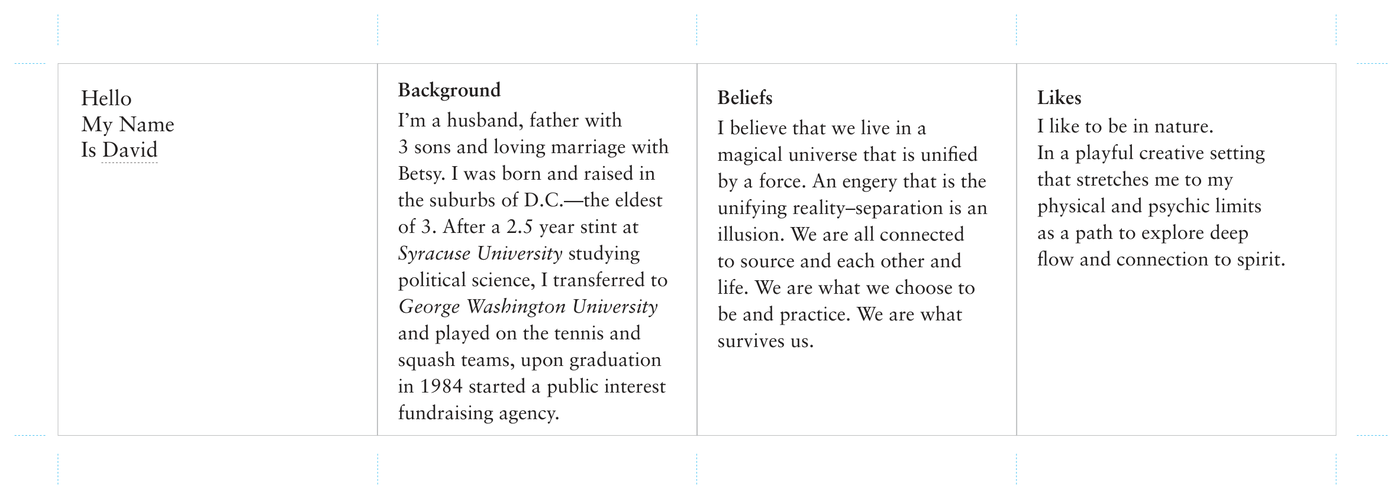
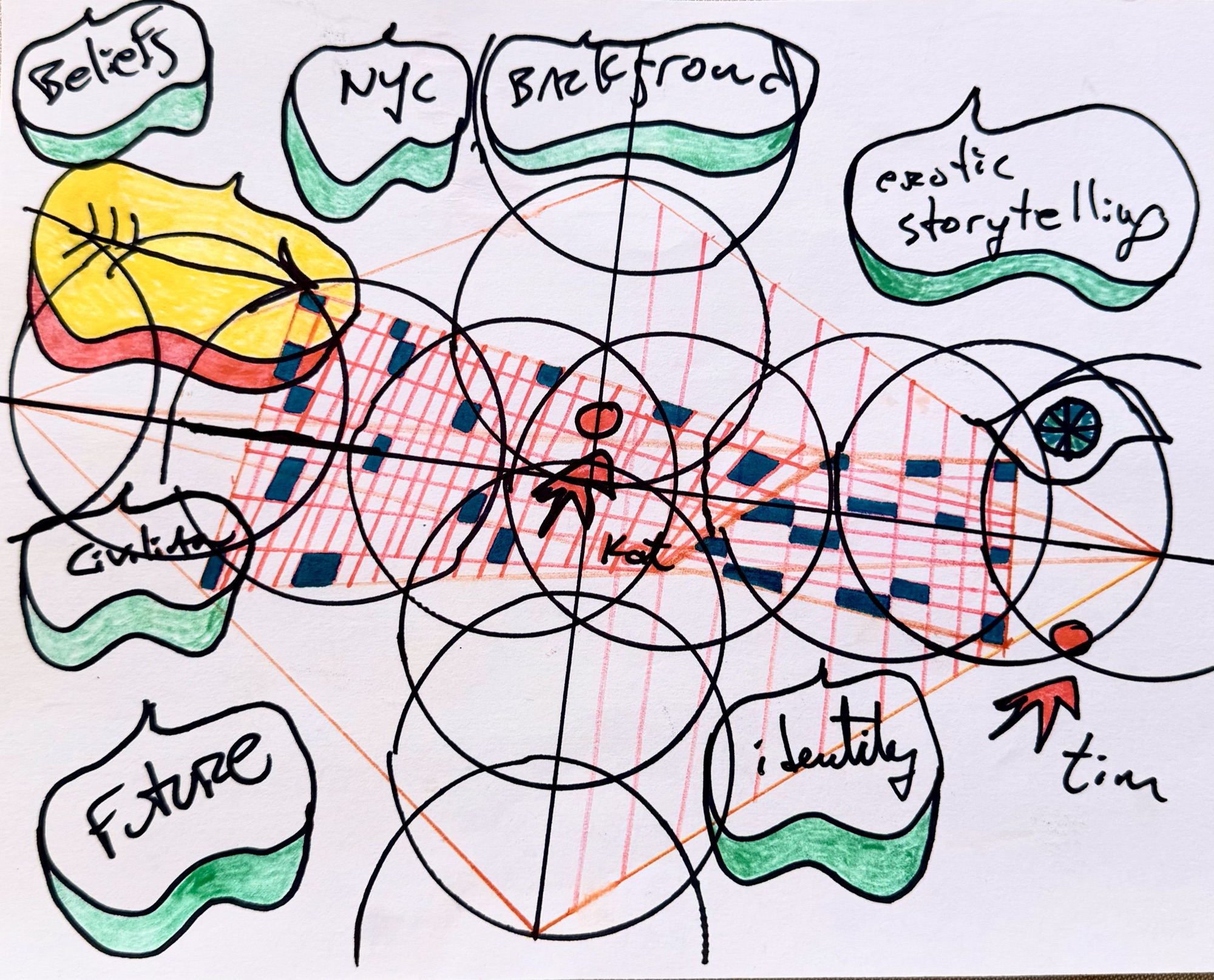
Same four questions, same eight panels — no two sittings come out looking or reading alike. Real pages from three graduates, first names only.

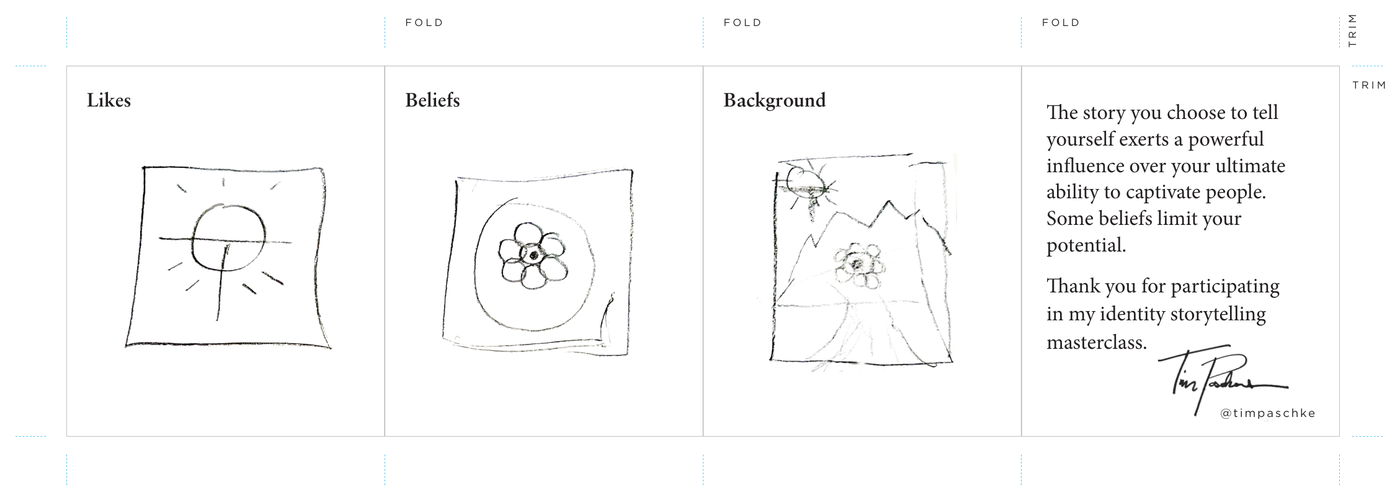
David hadn’t drawn since grade school. Pencil, a shaky circle, a mountain with a sun over it — the wobble is the point. This is his actual flat sheet, fold marks and all, before it became a book nobody else could make.
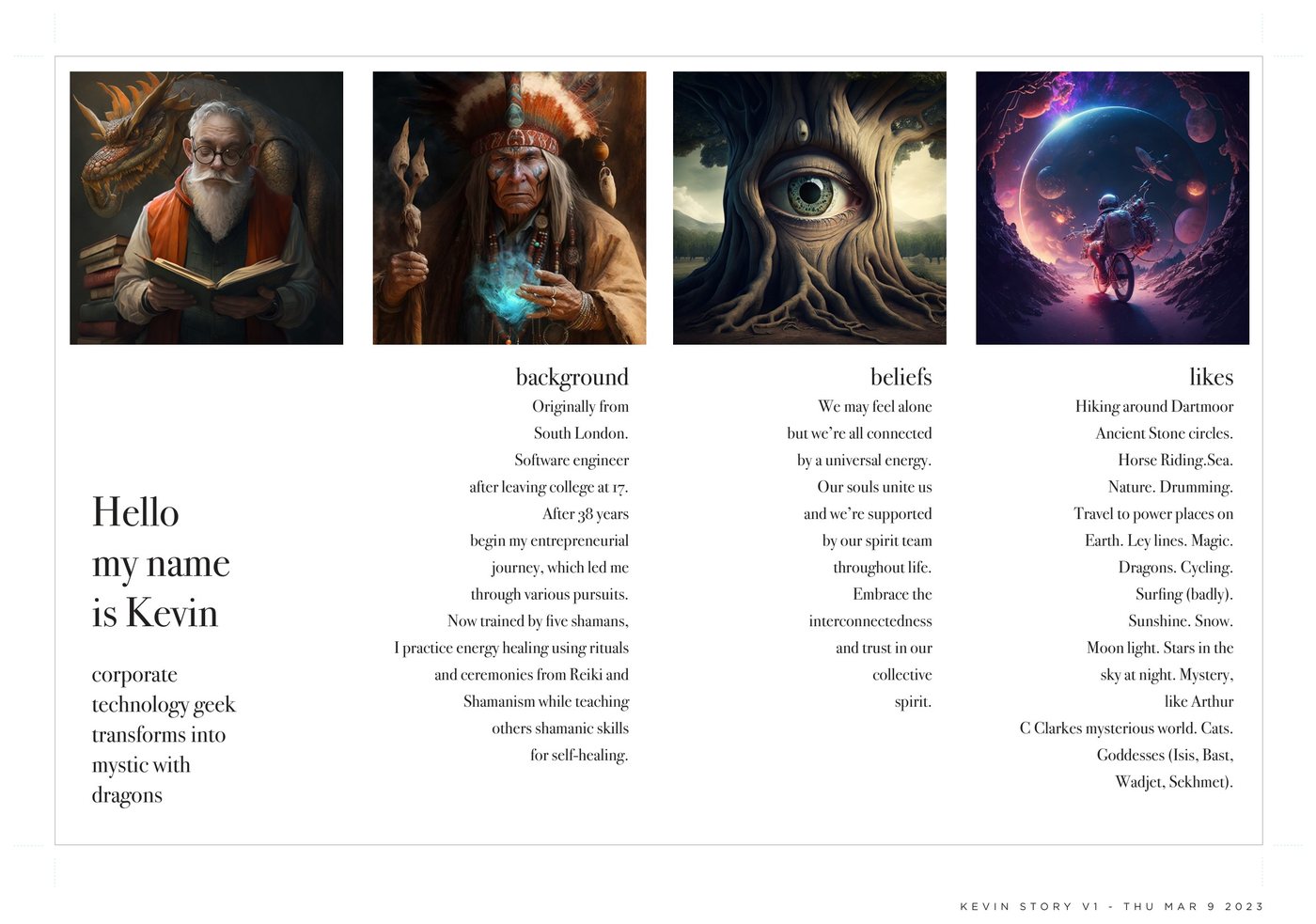
Kevin’s epithet: “corporate technology geek transforms into mystic with dragons.” Every panel got its own commissioned image instead of a paragraph — the myth did more work than a biography ever could.


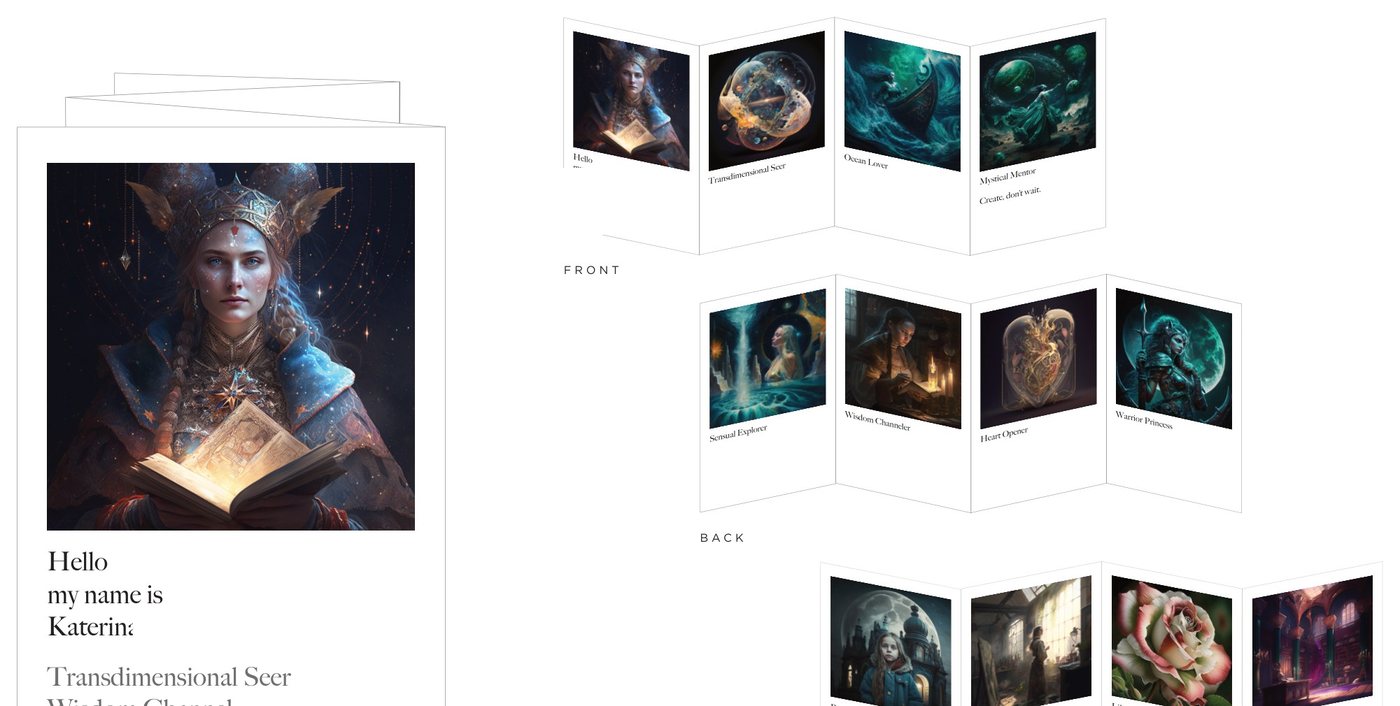
Katerina cared as much about the object as the words — how the panels fan, which face meets the light first, front versus back. Her case study became the clearest picture we have of the fold itself.
In the spirit of How Your Story Sets You Free — the sitting goes better when you show up a little loosened up, not performance-ready. Four ways to warm up beforehand:
Before we talk, find one object in your house that means more than it should. Bring it to the call — it’ll answer the Beliefs panel better than you will.
Skip “tell me about yourself.” Ask: what’s the last thing you did that surprised you? Write whatever comes first, unedited.
What would a myth call you? Not your job title — the thing people say about you when you’re not in the room.
The panel that makes you flinch a little to answer honestly is usually the one worth keeping.
Tim Paschke is the Creative Director of SHLTR Magazine and the brand designer behind identities for Newport, Aya, and Clover Caramels — nineteen years of telling stories for brands, now pointed at the most interesting subject available: you. The masterclass runs the same process a brand pays a studio for, scaled to one person and one sheet of paper.
SHLTR is a print magazine about architecture, design, and the life inside houses. Subscribing is free, and it’s the easiest way to stay close to this work.
Subscribe to SHLTR — it’s free — and when you’re ready to make the booklet, the masterclass is one email away.